
Metal Building Insulation in Midland Texas
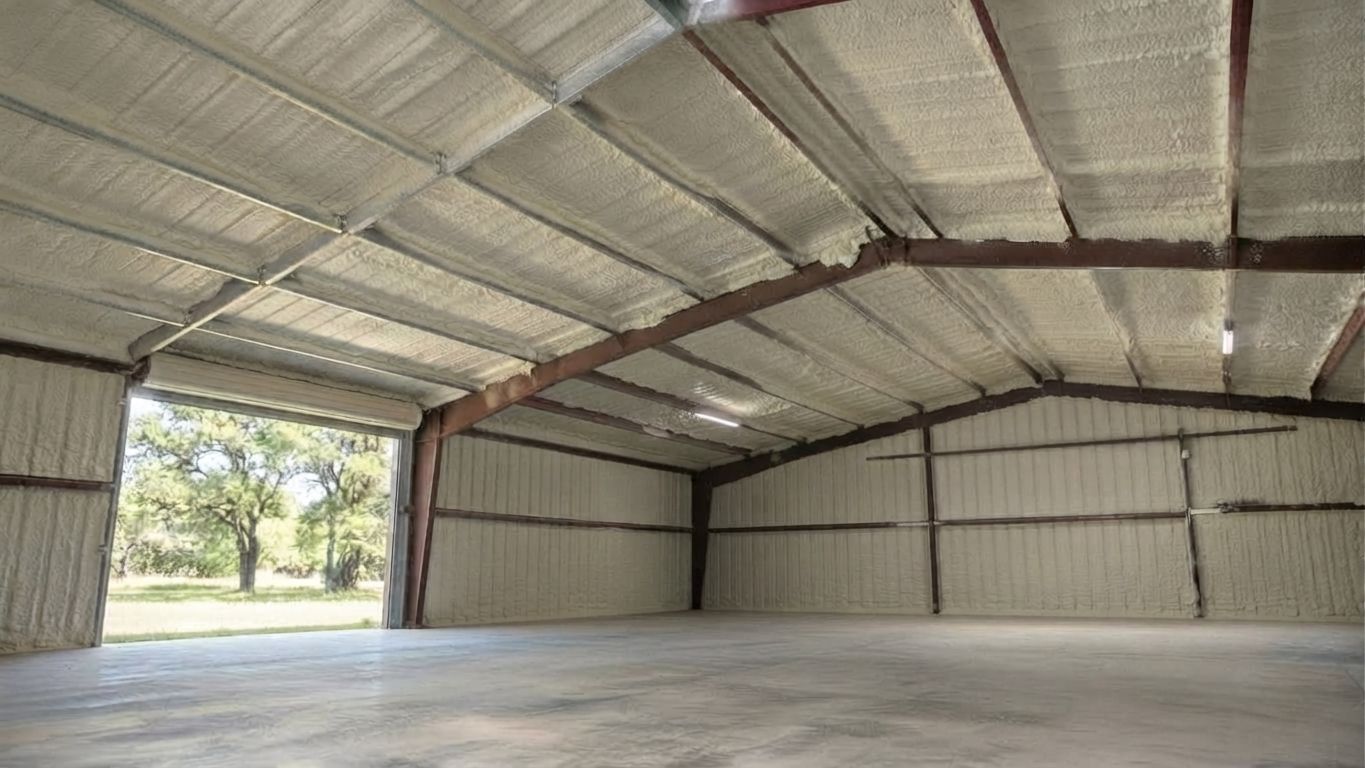
Midland Spray Foam Pros provides professional metal building insulation in Midland for residential and commercial metal structures. Proper insulation helps control heat transfer, air leakage, condensation, temperature swings, and HVAC demand in workshops, storage buildings, agricultural structures, garages, and other metal buildings while supporting more consistent indoor conditions and improved year-round comfort.
Trained insulation technicians assess metal framing, roof and walls, existing insulation, ventilation, moisture conditions, accessibility, and building use before recommending spray foam insulation or another suitable insulation system. This property-specific approach helps determine appropriate materials, application areas, and insulation requirements for reliable thermal performance and energy efficiency while addressing the specific construction and performance needs of each building.
Request a Free Quote
We will get back to you as soon as possible.
Please try again later.
Other Services:
• Overview
Metal Building Insulation Solutions for Midland Properties
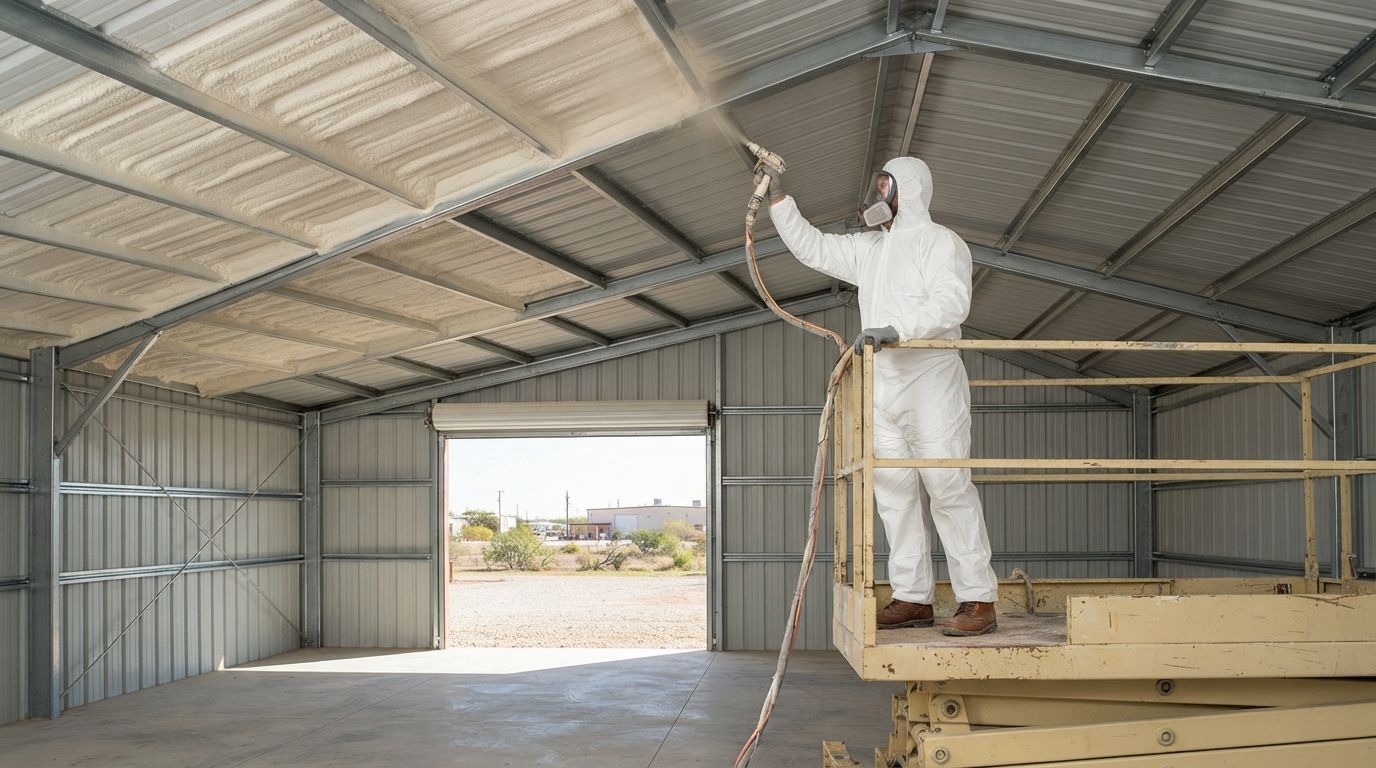
Midland metal buildings can experience substantial heat transfer and radiant heat during hot Texas weather because metal roof panels and wall panels readily conduct heat. Professional metal building insulation solutions focus on improving thermal resistance, controlling air leakage, and creating continuous insulation across appropriate areas of the building envelope to support temperature regulation and energy efficiency.
Spray foam insulation may be applied to suitable metal surfaces where its thermal and air-sealing characteristics match the building assembly. Other metal building insulation types, including fiberglass insulation, rigid foam board, and reflective foil systems, may be appropriate depending on the structure, intended use, metal panels, moisture conditions, accessibility, and required R-values. Selecting the right insulation material should be based on the specific building rather than assuming one insulation product is appropriate for every building.
• Problem
Common Insulation Problems in
Metal Buildings
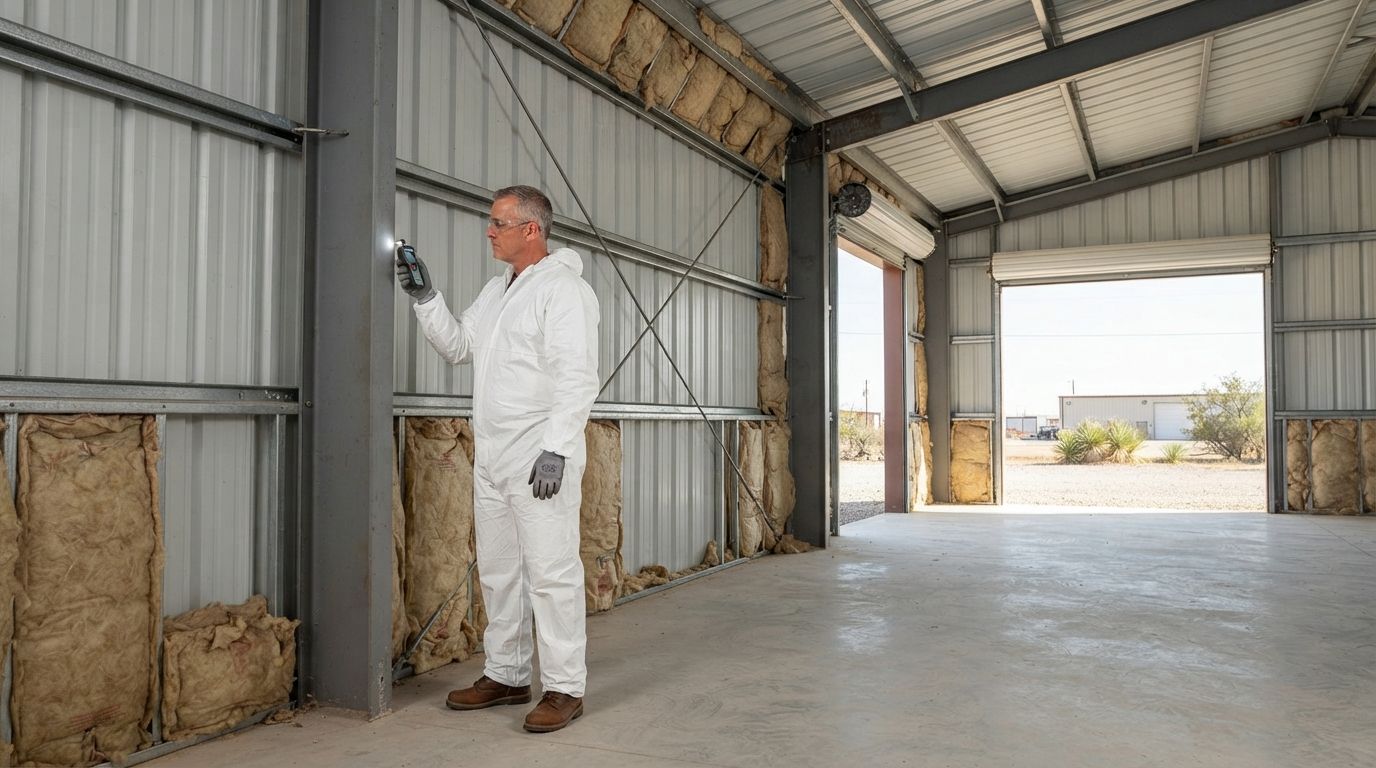
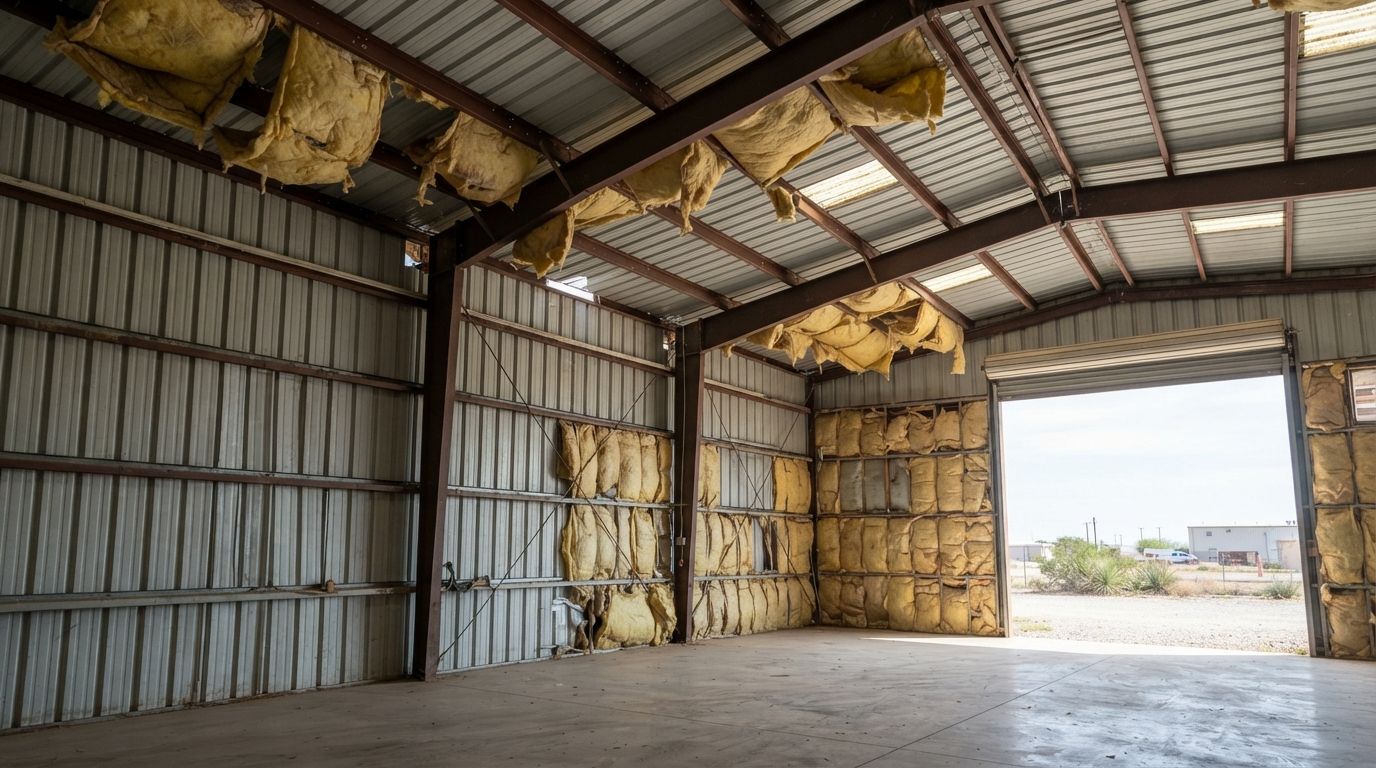
Metal buildings without adequate insulation can experience uneven indoor temperatures, unwanted heat transfer, thermal bridging through metal framing, and increased demand on HVAC and cooling systems. Gaps around framing, purlins, joints, penetrations, and other parts of the roof and walls of metal buildings can also allow air infiltration and air leaks that reduce overall thermal performance and increase energy costs.
Condensation in a metal building is another important consideration because temperature differences between warm air and cold metal surfaces can create conditions where moisture reaches the dew point. Existing moisture, ventilation, air leakage, and the location of the thermal barrier should be evaluated before insulation is installed. Proper insulation helps manage these conditions, but professional assessment is needed rather than assuming insulation alone will resolve every moisture concern.
Energy Performance
Insulation Damage
• Process
Our Metal Building Insulation Installation Process
Our metal building insulation process ensures proper preparation, professional installation, and consistent thermal coverage.
Building Assessment
Technicians inspect roof and wall surfaces, framing, existing insulation, proper ventilation, and moisture.
STEP
01
Area Preparation
Insulation materials, application areas, thickness, and preparation requirements are carefully determined.
STEP
02
Foam Installation
Professional equipment and controlled methods provide consistent roof and wall coverage.
STEP
03
Final Inspection
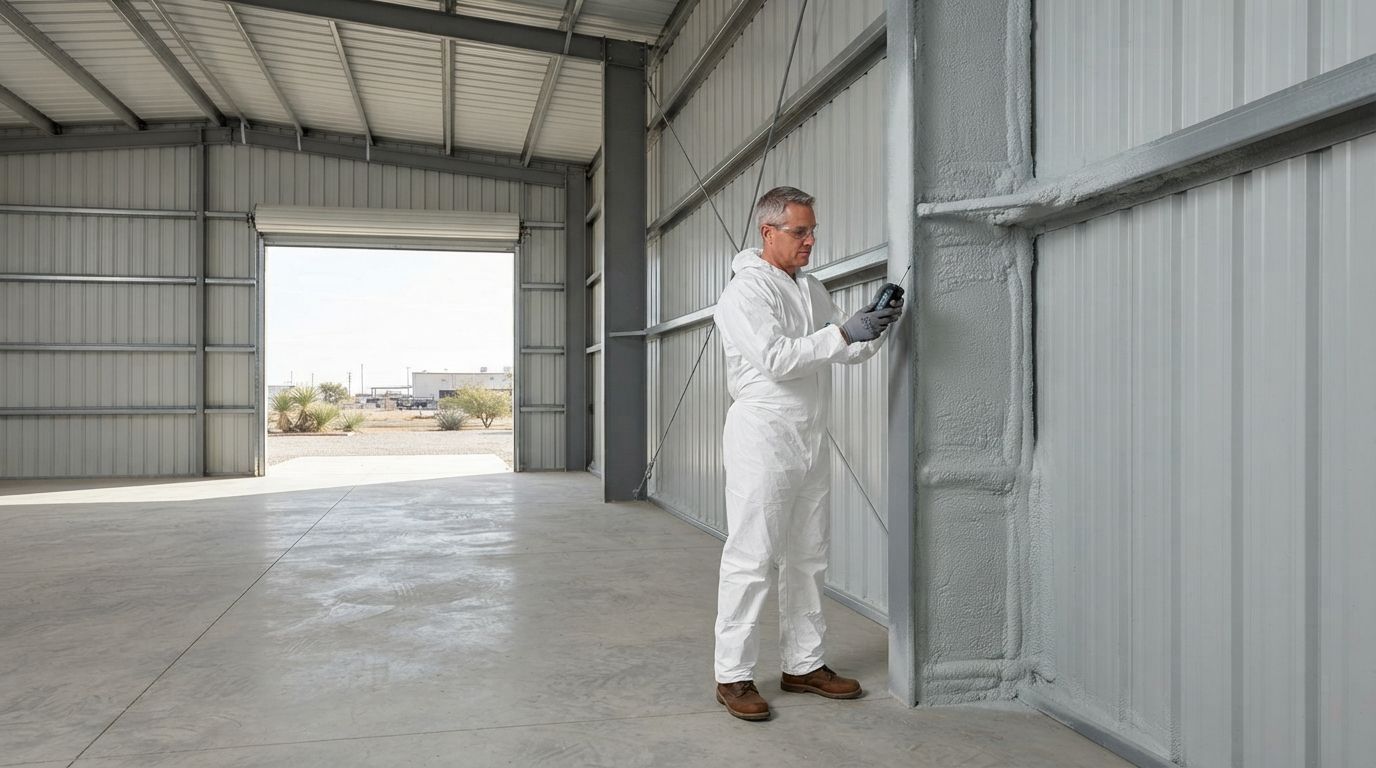
Installed insulation is carefully inspected for proper coverage, effective sealing, and application consistency.
STEP
04
• Cost
Factors That Affect Metal Building Insulation Service Costs
Metal building insulation costs in Midland depend on property conditions rather than a universal price per square foot. Building size, roof and wall area, insulation material, thickness, accessibility, substrate condition, existing insulation, and preparation can influence costs. Insulation systems have different requirements based on construction, intended use, thermal performance, and existing conditions. Larger or complex metal structures may require additional preparation, equipment, and installation time. An assessment helps determine the appropriate insulation system, project requirements, and scope before an estimate is prepared.
Material Requirements
Spray foam, fiberglass insulation, rigid foam board, and other metal building insulation materials have different costs, coverage requirements, methods, and thermal characteristics. Building size, insulation thickness, desired R-value, roof and wall area, and selected insulation system can affect the amount of material needed. Vapor-control components, reflective foil, or liner systems may become part of the project when appropriate for the building assembly and performance requirements.
Project Conditions
Accessibility, metal framing, substrate condition, existing insulation, purlins, penetrations, and preparation requirements can influence installation complexity and labor. Larger buildings or difficult roof and wall areas may require additional equipment and installation time. Existing insulation may also need evaluation or removal depending on its condition. Assessing these factors helps establish an appropriate project scope and provides a more reliable estimate for each Midland metal building.
• Midland Spray Foam Pros
Why Choose Our
Metal Building Insulation Team in Midland
Trained technicians use professional equipment and safety procedures while evaluating substrate conditions, exposed metal, accessibility, existing insulation, ventilation, moisture, air leaks, and thermal boundaries. Closed-cell and open-cell spray foam have different densities, thermal characteristics, R-values, and vapor permeance, so selection depends on building requirements. Closed-cell foam can provide thermal resistance and an air barrier in suitable applications, but technicians consider building use, metal surfaces, moisture, and performance needs before recommending spray foam or another approach for metal buildings.
8+
Years of Experience



• FAQS
Frequently Asked Questions About Metal Building Insulation in Midland
Get helpful answers to common Midland metal building insulation questions.
What type of insulation works well for metal buildings in Midland?
There is no single best insulation for every metal building. Closed-cell spray foam can provide high thermal resistance per inch and air-sealing properties, while fiberglass insulation, rigid foam board, and other systems may suit different assemblies. For Midland properties, trained technicians consider building use, available space, substrate conditions, moisture, ventilation, metal framing, and required thermal performance before recommending quality insulation.
Can an existing metal building be insulated?
Yes, many existing metal buildings can be retrofit with insulation. Before installation, professional technicians evaluate accessible roof and wall surfaces, framing, existing insulation, moisture or corrosion concerns, ventilation, and substrate compatibility. Depending on these conditions, spray foam, fiberglass, rigid insulation, or another suitable system may be used to insulate a metal building, improve thermal coverage, and control air leakage.
How much does metal building insulation cost in Midland?
Costs depend on the building's size, insulation material, required thickness, accessibility, surface condition, preparation needs, and installation complexity. Spray foam and conventional insulation systems have different material and labor requirements, so a single square-foot price does not accurately represent every Midland project. A professional assessment provides a clearer estimate based on the structure, proposed scope of work, and insulation process.
Can insulation help control condensation in a metal building?
Proper insulation can help manage condensation by controlling heat transfer and reducing temperature differences at metal surfaces. Insulation acts as part of the building's thermal-control system, but moisture management can also involve ventilation, indoor humidity, air leakage, vapor control, and drainage. Trained technicians evaluate these conditions because insulation helps reduce condensation risk but may not correct an existing moisture problem by itself.
What R-value does a metal building need in Midland?
The appropriate R-value depends on the building's use, roof and wall assemblies, insulation location, available space, and applicable energy or building-code requirements. Different insulation products provide different R-values and thermal resistance per inch. For Midland's hot conditions, professional evaluation should consider continuous insulation, thermal bridging, product specifications, and the complete thermal boundary rather than applying one R-value to every structure.
• Midland Spray Foam Pros
Request a Free Metal Building Insulation Estimate
Property owners considering metal building insulation can request an assessment to evaluate the structure and proposed application areas. Midland Spray Foam Pros examines accessible roof and wall assemblies, metal framing, existing insulation, substrate conditions, ventilation, moisture concerns, penetrations, and accessibility before recommending spray foam or another appropriate insulation approach to insulate your metal building.
The assessment can identify preparation requirements, incomplete insulation, air leaks, suitable insulation material options, and factors that may affect installation. Recommendations are based on property conditions, selected product specifications, manufacturer instructions, and applicable project requirements so owners can understand how metal building insulation helps reduce unwanted heat transfer and HVAC system demand without relying on guaranteed energy savings. Call 432-789-1984 to discuss metal building insulation in Midland, Texas, and current scheduling availability.